Lula Landry's visit to her birth mother before her death
The Cuckoo's CallingLula Landry’s visit to her birth mother shortly before her death is a pivotal but unexplained episode in the reconstruction of her final day. Her driver, Kieran Kolovas-Jones, recalled taking her to the visit and described a marked change afterward: Lula returned unusually quiet, wrote something on a piece of blue paper, and soon left a planned lunch alone. The recollection supplies a chain of concrete clues, but not their resolution; neither the paper’s contents nor the reason for Lula’s change in manner is established.
Background and purpose
The visit belongs to Lula’s search into her biological origins. Cormoran Strike’s consideration of the case connects that search to the discovery that Lula had been researching her roots and had traced her birth mother. He also recognizes that revelations about Lula’s origins could have troubled her adoptive family, including John Bristow, whose fixation on a black man near the scene Strike views in light of that family history. This is Strike’s interpretation of Bristow’s instability, not proof that the visit itself caused Bristow’s suspicions or explains Lula’s death.
Kolovas-Jones’s account places the visit on the morning of the day before Lula died. He said that Lula did not like visiting her mother and was not looking forward to this particular meeting because her mother had recently been discharged from hospital. He remembered Lula as more tense than he had seen her before. The recollection conveys apprehension before the meeting, while leaving its cause and the mother’s condition beyond those stated circumstances unspecified.
The driver’s account
Kolovas-Jones had driven Lula to her mother’s home and waited. Before the visit, he had also told her that he could not drive her that evening because he was booked to take Deeby Macc. He admitted that he could have exchanged assignments but had wanted to meet the musician; Lula was unhappy about his decision. That disagreement forms part of the day’s background, but the evidence does not show that it explains what happened during the visit or Lula’s later silence.
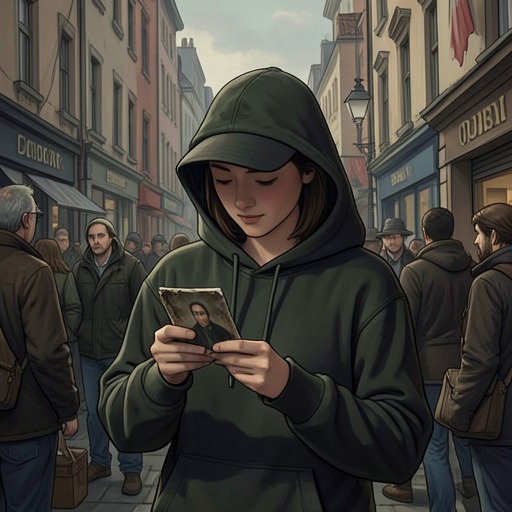
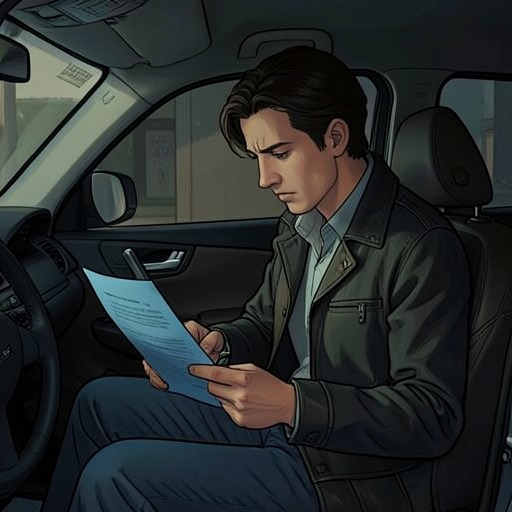
When Lula came out, Kolovas-Jones found her unlike her usual self: she was very quiet, and he thought she seemed almost in shock. She asked him for a pen and wrote on a piece of blue paper without speaking to him. The sequence matters because the writing followed the visit and accompanied a striking change in her manner. Yet the account gives no words from the paper and does not establish whether Lula was recording something she had learned, making a note, or writing for another purpose.
Vashti and the missing paper
Kolovas-Jones then drove Lula to Vashti, a boutique with a café, where she was expected to have lunch with a friend. He identified the friend only uncertainly, recalling that she had met Lula while in hospital for mental-health problems and had been living at St. Elmo’s Hostel for the Homeless in Hammersmith. The driver could not remember her name confidently, offering several mistaken possibilities; his testimony is therefore more precise about the planned meeting and its outcome than about the friend’s identity.
Lula remained inside for roughly fifteen minutes, then came out alone and asked to be driven home. The friend was not with her, although Kolovas-Jones said that the two women normally travelled together and that he would usually give the friend a lift home after their outings. The piece of blue paper was also gone. Lula said nothing during the drive back. The abrupt departure, absent companion, missing paper, and continuing silence make the Vashti stop an unresolved break in the day’s sequence; the evidence does not explain whether the friend arrived, whether the women met, or what became of the paper.
Evidence and significance
Kolovas-Jones said he had told the police about the blue paper, but they had dismissed it as probably a shopping list. That response leaves a possible clue without a known content or demonstrable connection to the death. The detail is important precisely because it is specific yet inconclusive: the paper’s disappearance invites questions, while the testimony cannot answer them.
In the investigation, the visit gathers together Lula’s pursuit of her origins, unease about seeing her mother, a sudden change in behaviour, and a lost piece of writing. Strike’s broader suspicion that her search into her biological roots could have unsettled her adoptive family gives the episode added relevance, but remains an interpretation rather than a confirmed causal account. The visit therefore functions as a hinge in the reconstruction of Lula’s last day: it reveals that something about the encounter or its aftermath disturbed her, without disclosing what she learned or establishing how that disturbance relates to her death.